
Dublin’s Music Scene: Where Traditional Folk Meets Modern Beats in 2026
Dublin’s music scene in 2026 is a thrilling, living paradox. It’s a place where the soulful wail of a fiddle from a centuries-old pub spills onto the same street as the thumping bass of a modern electronic set, creating a unique sonic tapestry that is both deeply traditional and fiercely contemporary.
The Rich Heritage of Dublin’s Musical Identity
Historical Evolution of Dublin’s Music Culture
Dublin’s musical roots dig deep into Ireland’s history, originally serving as an oral tradition for storytelling and community bonding. The city’s sound evolved through centuries, absorbing influences from Celtic harpists to American rock and roll. This historical layering created a fertile ground where reverence for the past never stifles innovation for the future.
The 20th century saw Dublin become a crucible for folk revival and later, a punk rock hotbed. Bands like The Dubliners and Thin Lizzy, though different in genre, shared a common Dublin trait: raw, authentic storytelling. This established a blueprint that modern artists still follow, proving that a good song, regardless of its style, always has a story at its heart.
The Role of Traditional Irish Music in Modern Dublin
Traditional Irish music is far from a museum piece in Dublin; it’s the city’s rhythmic pulse. It provides a foundational language for musicians, a set of codes and melodies that everyone from a busker on Grafton Street to a producer in a studio understands. This shared vocabulary allows for a unique musical dialogue across generations.
In contemporary settings, trad music acts as a cultural anchor. Its presence in everything from advertising to film scores grounds modern Irish identity in something tangible. It’s not just background music; it’s a reminder of where the modern beat comes from, ensuring the old tunes continue to find new ears.
Cultural Significance of Pub Sessions
The pub session is the beating heart of Dublin’s traditional music scene. These informal gatherings in the corner of a pub are not formal performances but communal, participatory events. Anyone with an instrument can join, and everyone is encouraged to sing along, making it a powerful social glue.
This tradition turns music from a spectator sport into a shared experience. It’s where tunes are passed down, techniques are learned, and the next generation of musicians cuts its teeth. The session embodies the Irish concept of craic—a mix of fun, conversation, and music that you can’t find on any streaming service.
Essential Venues Shaping Dublin’s Contemporary Scene
Iconic Traditional Music Pubs
Certain pubs are sacred ground for trad purists. These institutions have hosted legends and nurtured novices for decades, offering an authentic experience untouched by time.
- O’Donoghue’s: This cramped, legendary pub on Merrion Row is hallowed ground. It’s where The Dubliners famously formed, and the trad sessions here are as genuine as it gets, often spilling out onto the street.
- The Cobblestone: A Northside gem in Smithfield, this is a musician’s pub. It’s less of a tourist show and more of a serious session house, where you’re more likely to see a crowd of locals listening intently to a complex reel.
- The Brazen Head: As Ireland’s oldest pub, the walls here literally drip with history. The music sessions are a perfect match—earthy, passionate, and steeped in stories.
Modern Live Music Venues
For every venerable trad pub, there’s a venue pushing the boundaries of Ireland’s sound. These spaces are the launchpads for the next international stars.
- Whelan’s: An institution in its own right, this venue on Wexford Street is synonymous with indie, rock, and folk. Its iconic “Ones to Watch” nights have launched countless careers, and its intimate back room is a rite of passage for any band.
- The Workman’s Club: Across the river, The Workman’s Club is the cool older sibling. It’s the go-to for cutting-edge electronic, hip-hop, and alternative gigs, fiercely supporting emerging local talent before anyone else.
Temple Bar District’s Musical Offerings
Temple Bar is a paradox—simultaneously Dublin’s tourist hub and a genuine cultural quarter. While some pubs here host more commercial “show sessions,” the energy is undeniable. The Temple Bar Pub itself offers daily sessions that mix traditional tunes with modern hits, providing an accessible, if crowded, gateway to Irish music.
Beyond the pubs, Temple Bar is home to cultural centres like the Button Factory, which hosts more avant-garde electronic and international acts. Love it or loathe its crowds, the district remains a central, buzzing artery in Dublin’s musical body.
The Fusion of Traditional and Modern
Street Performance Culture
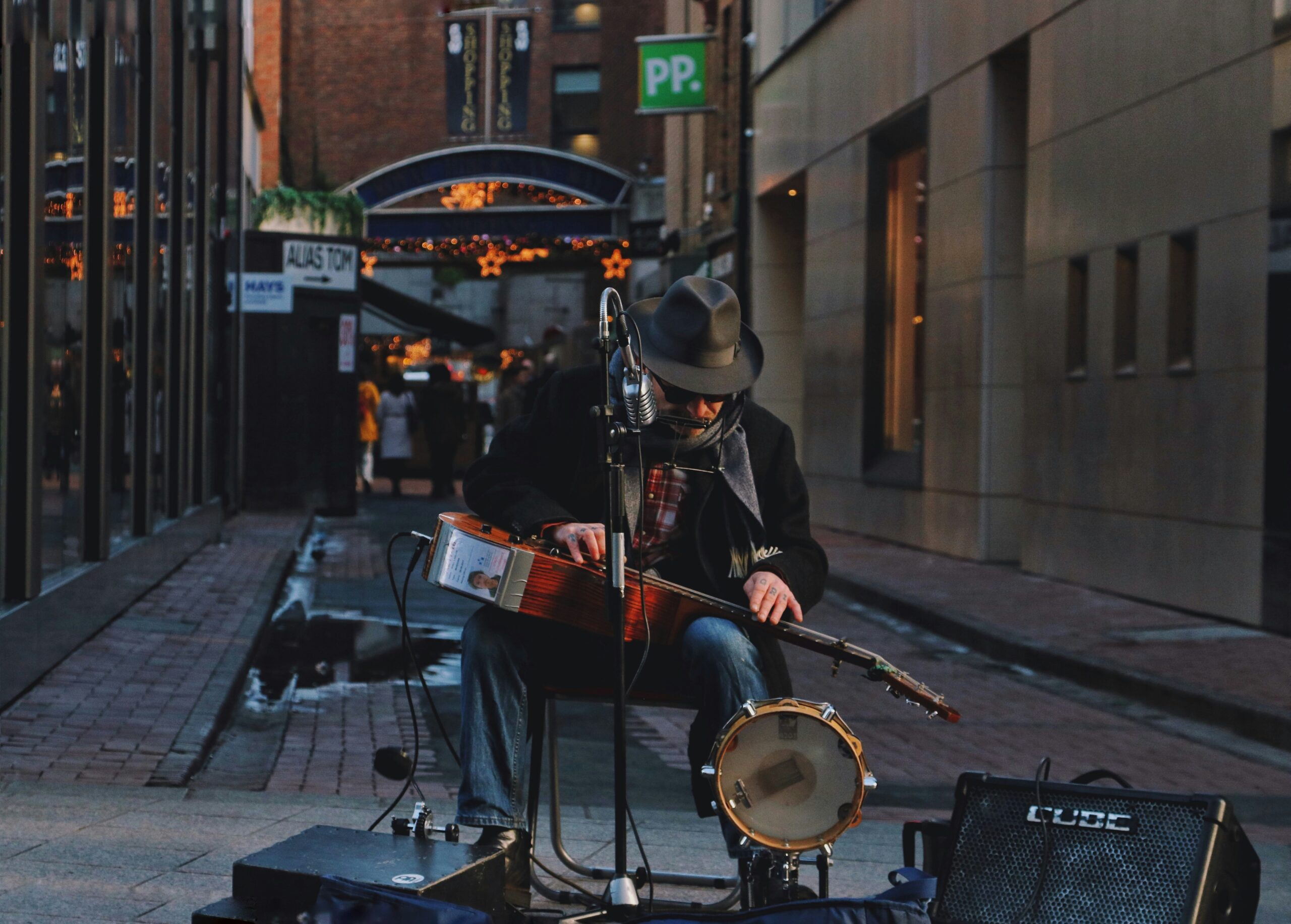
Dublin’s streets are its most democratic stage. The city’s busking culture is world-renowned, a constant soundtrack for shoppers and tourists alike.
- Grafton Street Scene: This is the big leagues. Buskers here range from chart-topping hopefuls to breathtaking trad ensembles. It’s a talent showcase where you might just see the next Hozier or Dermot Kennedy practicing their craft.
- Temple Bar Buskers: The performances here are a whirlwind of energy, designed to capture the attention of passing crowds. You’ll find everything from full folk bands to solo artists with loop pedals creating modern soundscapes.
- Henry Street Musicians: Often a bit grittier than Grafton Street, the performances here feel raw and unfiltered. It’s a fantastic spot to hear traditional music played with genuine passion, away from the main tourist drag.
Contemporary Artists Incorporating Traditional Elements
The most exciting sound in Dublin today is the fusion sound. Artists are no longer choosing between trad and modern; they’re melding them. Bands like Kíla and Lankum use uilleann pipes, fiddles, and bodhráns not as novelty acts but as core components of a dark, atmospheric, and utterly contemporary folk sound.
Even in pop and rock, the influence is palpable. Artists like Denise Chaila weave Irish linguistic cadences into her hip-hop, while others sample old sean-nós songs into electronic tracks. This isn’t cultural appropriation; it’s cultural conversation, and it’s producing some of the most original music coming out of Europe.
Cross-Genre Collaborations
The walls between genres are crumbling in Dublin’s music scene. It’s now common to see a renowned trad fiddler guesting on an indie band’s album or an electronic producer remixing a classic folk tune. These collaborations happen organically in venues and studios across the city, fueled by a shared respect for musical craftsmanship.
Initiatives like the First Music Contact workshops actively encourage these meetings, knowing that the most innovative sounds are born from unexpected partnerships. This spirit ensures the scene never grows stagnant.
Dublin’s Music Festival Calendar 2026
Traditional Music Festivals
For a deep dive into the roots, nothing beats a dedicated trad festival. The Fleadh Cheoil, while moving location annually, is the pinnacle—a sprawling, immersive celebration of Irish music that takes over a city. Closer to Dublin, the Kilkenny Tradfest offers a more intimate but equally passionate experience set in a stunning medieval city.
Contemporary Music Events
Dublin’s calendar is also packed with events celebrating its modern beat. Longitude brings international hip-hop and pop megastars to Marlay Park. For a more curated indie experience, Hard Working Class Heroes (or its successors) focuses squarely on showcasing the best of Ireland’s emerging talent across multiple city venues.
Hybrid Festivals Celebrating Both Genres
The most exciting trend is the rise of hybrid festivals. Events like Another Love Story or certain stages at Electric Picnic (though outside Dublin) expertly program traditional acts alongside electronic DJs and rock bands. This reflects the city’s own listening habits and provides a perfect snapshot of Dublin’s music scene: diverse, inclusive, and impossible to pigeonhole.
Supporting Dublin’s Music Community
Local Artist Initiatives
The health of the scene relies on active support. Organizations like First Music Contact and the Music & Entertainment Association of Ireland provide crucial resources, from legal advice to stage management, helping artists navigate the business side of music. Buying music directly from bandcamp pages or artist websites ensures they see more revenue than from streaming alone.
Venues Supporting Emerging Talent
The true heroes of the scene are the venues that dedicate nights to new artists. Places like Whelan’s, The Workman’s Club, and even smaller bars like The Sound House provide essential platforms. Attending a gig on a quiet Tuesday night is one of the best ways to discover your new favorite band and directly support the ecosystem.
How to Experience Dublin’s Music Scene Like a Local?
Ditch the itinerary. Instead of chasing the “most famous” session, wander the streets north and south of the Liffey. Pop into a pub because you hear music coming out, not because it’s in a guidebook. Follow local music blogs and Dublin-based playlists on Spotify to see who’s playing in the smaller venues. Talk to the bartender—they always know what’s on and where the best craic is that very night.
Practical Guide for Music Enthusiasts
Best Times to Experience Live Music
While you can find music any night, the energy peaks from Thursday through Sunday. Weekend afternoons often feature sessions starting as early as 2 PM in trad pubs. For the modern venues, check listings—gigs typically start around 8 PM, with headliners on after 10:30 PM.
Recommended Music Routes
Try a themed crawl. For a trad-focused night, start at The Brazen Head, then cross the river to O’Donoghue’s, and finish at The Cobblestone. For a modern twist, begin with pre-drinks and a gig at Whelan’s, then head to The Workman’s Club for late-night DJs. Always leave room for spontaneity—your best memory might be in a pub you never planned to enter.
Tips for Authentic Musical Experiences
- Listen First: When you enter a session, don’t just talk over it. Sit, listen, and absorb the skill.
- Buy a Round: Musicians often play for the love of it and a pint. Sending a drink over is a great gesture.
- Check Social Media: Venues and artists constantly post last-minute gigs and line-up changes.
- Talk to People: Dublin’s music scene is social. You’ll learn more from the person next to you at the bar than any blog.
Summary
Dublin’s music scene doesn’t just offer a choice between old and new; it celebrates the beautiful noise they make together. It’s in the crowded pub where a tin whistle solo gets a mosh pit cheering, and in the silent respect a busker commands on a busy street. So, lace up your walking shoes, follow your ears, and let the city’s soundtrack guide you. You’re guaranteed to leave with a song in your heart and a few new favorite artists on your playlist. Just remember to tip the buskers.
Frequently Asked Questions
What is the best area in Dublin for live music?
There’s no single best area. Temple Bar is the most concentrated for tourists, but for a more authentic mix, explore the streets around St. Stephen’s Green for pubs and the creative clusters of Smithfield and Portobello for more alternative venues.
Is there a difference between a “show session” and a real trad session?
Absolutely. A “show session” is a scheduled performance for an audience, often in a busy tourist pub. A real “trad session” is an informal gathering of musicians playing for themselves in a circle, often unrehearsed. Both can be enjoyable, but the latter is the true heart of the tradition.
Do I need to pay to see music in Dublin pubs?
Most traditional pub sessions are free, though it’s customary to buy drinks. Purpose-built music venues like Whelan’s will have a cover charge for ticketed gigs, which you should always check in advance.
Who are some modern Dublin artists that use traditional sounds?
Keep an ear out for Lankum, whose dark folk is critically acclaimed, the electro-trad fusion of Kíla, and the powerful indie folk of Lisa O’Neill. For something completely different, Kojaque blends hip-hop with distinctly Dublin storytelling.
What is the biggest music festival in Dublin?
Longitude is typically the largest in terms of crowd size and international headliners. However, for a festival deeply connected to the local scene, smaller multi-venue events like the Hard Working Class Heroes showcase are just as significant.
How can I find out about gigs happening during my visit?
Your best resources are local listings sites like Nialler9.com, the Irish Times entertainment section, and the social media pages of venues like Whelan’s and The Workman’s Club. A quick search before you arrive will reveal a wealth of options.